October 28, 2026
Important Components of a Norweco Singulair Green System
By @miloicyz840

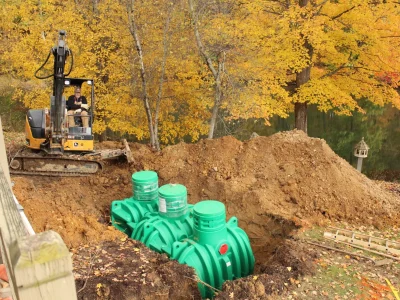
A Norweco Singulair Green system is not a single tank with a blower bolted on the side. It is a coordinated treatment package, and its performance depends on how well each part does its job day after day. Homeowners often hear the brand name, see the control center, maybe notice the service lid in the yard, and assume the whole system works like a conventional septic tank. It does not. The Singulair Green line is an aerobic treatment system, which means it relies on active treatment, timed operation, and carefully managed flow through several treatment zones.
That difference matters. A standard septic tank mainly settles solids and sends partially treated effluent onward. A Singulair Green system goes further by introducing oxygen, supporting aerobic bacteria, clarifying the water, and in many installations sending much cleaner effluent to final dispersal. When the system is installed and maintained properly, it can serve sites where soil conditions, lot size, or environmental sensitivity call for a higher treatment standard than a simple septic setup can deliver.
The phrase “important components” sounds straightforward, but in the field there are really two categories to think about. First, there are the core treatment components that process wastewater. Second, there are the support components that keep the system stable, inspectable, and serviceable. Ignore either group and performance suffers.
Why the system works as a whole, not as isolated parts
One of the most common mistakes I see is focusing on only the visible piece, usually the aerator or the control panel. If that blower runs, people assume everything is fine. In reality, the blower may be operating while sludge levels are too high, a return path is restricted, or the final effluent quality is slipping because solids are carrying over from an upstream chamber.
A Singulair Green system depends on sequence. Wastewater enters, solids separate, aeration supports biological treatment, settled material is managed, and clarified effluent moves onward. Each stage protects the next one. If the pretreatment area lets too much grease or suspended solids pass, the aeration process works harder than it should. If clarification is poor, downstream dispersal components can clog faster. If electrical controls fail, treatment quality can drop before anyone notices a backup.
That is why understanding the main components is useful for both homeowners and professionals. It helps you ask better questions, spot problems earlier, and appreciate why service intervals are not just a manufacturer suggestion.
The treatment tank, where the process starts
At the center of the Norweco Singulair Green system is the treatment tank assembly. Depending on the installation, this may be a precast concrete tank, fiberglass tank, or another approved tank configuration designed for the treatment unit. The tank is divided internally into functional treatment zones rather than acting as one open container.
This tank does several jobs at once. It receives raw household wastewater, holds flow long enough for biological treatment to occur, provides separation between process stages, and protects the treatment environment from outside disturbance. Volume matters here. A treatment unit needs enough detention time to let solids settle and microbes work effectively. Undersized or poorly installed tanks can produce erratic treatment, especially in homes with sharp daily peaks such as morning laundry, multiple showers, or weekend occupancy swings.
The physical condition of the tank is just as important as its design. A sound tank keeps groundwater out and wastewater in. In areas with seasonal high water tables, infiltration can dilute wastewater and overload the treatment train. In dry climates, settlement and poor backfill practices can create structural stress. Hairline cracks do not always mean immediate failure, but any evidence of infiltration, root entry, or shifting lids deserves attention before it compromises treatment.
The pretreatment or trash settling zone
Before wastewater reaches the most active biological stage, heavier solids need a chance to settle and floatables need a chance to separate. In many Singulair Green configurations, the first compartment or pretreatment zone handles that initial separation. This is easy to overlook because nothing dramatic happens there, but it protects the rest of the system from premature fouling.
Think about what enters household wastewater beyond water itself. Toilet paper, organic solids, fats, soap residues, lint, and food particles all show up in varying amounts. Even in careful households, there is always some solids loading. The purpose of the pretreatment area is to slow the flow and let gravity do some early work.
When this zone is doing its job, downstream treatment is more stable. When it is neglected, trouble follows. A tank that goes too long without proper pumping can lose effective settling volume. That means solids stay suspended longer and are more likely to move into the aeration area or onward into clarification spaces. Once that happens, system performance usually becomes less forgiving. Effluent quality drops, maintenance becomes messier, and alarms may show up later than the actual problem started.
In practice, pumping intervals depend on occupancy, water use, garbage disposal habits, and tank size. A lightly used vacation home and a busy five-person household do not load a system the same way. That is why blanket advice like “pump every three years” should be treated as a starting point, not a rule carved in stone.
The aeration chamber, the heart of the process
If there is one component that gives the Norweco Singulair Green system its identity, it is the aeration stage. This is where oxygen is introduced so aerobic microorganisms can break down dissolved and suspended organic matter more aggressively than in an ordinary septic environment.
Aerobic treatment works because oxygen changes the biology. In a conventional septic tank, treatment occurs mostly under low-oxygen or no-oxygen conditions. That process is useful, but slower and less complete. In an aerobic chamber, oxygen-rich conditions favor a different microbial community, one that can reduce organic strength more efficiently and produce a cleaner effluent when the system is balanced.
The aeration chamber is not just a bubble bath for sewage. Its design must provide enough mixing to keep microbes active without stirring settled solids so violently that they bypass later settling stages. That balance matters. Too little aeration and treatment weakens. Too much turbulence in the wrong place and solids management suffers.
This is also the stage most sensitive to non-biodegradable chemicals and bad household habits. Paint washout, solvents, excessive bleach, quaternary disinfectants, and large slug discharges of harsh cleaners can knock back the bacterial population. One accidental dump may not ruin a healthy system permanently, but repeated chemical stress often shows up as odors, cloudy effluent, or reduced treatment quality.
The aerator or air delivery equipment
The aeration chamber cannot function properly without the equipment that supplies air. On many installations, that means a mechanical aerator, compressor, or blower assembly designed to deliver oxygen into the treatment zone. Exact hardware varies by model and installation, so it is important not to assume every Singulair Green unit uses the same air delivery method or service procedure. The common thread is that oxygen transfer is essential.
This component deserves respect because it works continuously or on a controlled cycle and tends to run in a demanding environment. Heat, moisture, dust, insects, power quality, and simple wear all affect its lifespan. I have seen units where the treatment train was fundamentally sound, but the air equipment had been gradually losing output for months. The homeowner thought the system was fine because there was no backup in the house. Meanwhile, treatment quality had already fallen off.
Good service technicians listen to these units. A change in sound often tells a story before a meter does. A blower that whines, rattles, runs hot, or cycles abnormally may be warning of bearing wear, restricted airflow, or electrical trouble. Homeowners do not need to become mechanics, but they should know that “still running” and “running correctly” are not always the same thing.
Air intake protection also matters more than most people realize. If vents or intakes are blocked by grass clippings, leaves, wasp nests, or stored items, oxygen transfer suffers. In one fairly typical rural installation, a homeowner built a decorative enclosure around the equipment to hide it from view. It looked neat, but it restricted ventilation enough to shorten component life and make summer heat a recurring issue.
Clarification, where the system separates treated water from solids
After aeration, wastewater still contains suspended biological solids. Those solids are not necessarily a sign of failure, they are part of the treatment process. The next step is clarification, where the system allows those solids to settle so clearer effluent can move onward.
This may occur in a dedicated clarifier section or settling zone within the treatment tank. The goal is simple, but execution matters. Flow must be calm enough for settling to occur. Internal geometry, baffles, and passageways help reduce short-circuiting so wastewater does not rush through without enough residence time.
Clarification is one of the less glamorous components, but it protects the drainfield or final dispersal area from unnecessary solids loading. Once solids begin to leave the treatment unit in significant amounts, the downstream soil interface or dispersal media bears the cost. That cost may not appear immediately. You can have a system that seems to “work” for months while quietly fouling the receiving area.
A stable clarifier also depends on sludge management. Excess solids accumulation can reduce effective settling volume and increase carryover. This is one reason regular inspection is so valuable. Sludge and scum levels tell a more honest story than appearances from the yard surface.
Internal return paths, baffles, and flow control features
People tend to focus on tanks and motors, but some of the most important components are passive. Baffles, transfer openings, return pathways, and internal partitions control how wastewater moves from one zone to the next. They reduce turbulence, prevent direct short-circuiting, and keep scum and settled sludge from drifting where they do not belong.
When these components are missing, damaged, or obstructed, the whole system can behave unpredictably. I have seen otherwise decent systems underperform because an internal fitting shifted or a passage partially blocked with debris. The symptoms were subtle at first, cloudy effluent, irregular sludge distribution, occasional odor. Left alone, those small disturbances started affecting the final discharge quality.
Because these features are not visible during day-to-day use, they are often only checked during scheduled service. That is a good argument for using technicians who inspect the treatment process itself rather than just verifying that the alarm is silent and the lid is intact.
Controls, alarms, and the electrical side of treatment
Unlike a passive septic tank, a Singulair Green unit depends on controls and electrical reliability. The control center, timer functions where used, alarm system, and associated wiring are all major components, even though homeowners may think of them as secondary accessories.
An alarm is not there to annoy you. It is there because treatment can degrade long before plumbing norweco singulair green backups make the problem obvious indoors. High water alarms, aeration failure alarms, or control faults give you a chance to respond early. That early response often makes the difference between a simple repair and a costly cascade of problems.
Electrical components need a dry, protected installation and competent troubleshooting. Loose connections, corrosion, tripped breakers, failed capacitors, moisture intrusion, and rodent damage are more common than many people expect. Rural systems especially seem to attract insects and small animals. A ten-minute electrical check during routine service can prevent a much larger problem later.
There is also a practical ownership point here. Homeowners should know which breaker serves the treatment unit, where the alarm reset is located if the design includes one, and whom to call when an alarm sounds. They should not, however, silence alarms and move on without figuring out why they activated. That habit causes more hidden damage than people realize.
Access risers and service lids, the overlooked essentials
A system that cannot be inspected easily often does not get inspected when it should. That is why risers and service lids are more important than they look. They provide safe, practical access to the treatment zones for maintenance, pumping, and inspection.
Old installations without grade-level access often ended up being ignored because every service call required digging. Once risers became more common, routine maintenance became more realistic and more thorough. The difference is substantial. A technician who can inspect all relevant compartments without excavation is more likely to catch early sludge accumulation, mechanical wear, or abnormal flow patterns.
Lids also need to be secure, weather resistant, and appropriate for their setting. In areas with children, pets, or lawn traffic, lid integrity is a real safety issue. A cracked or loose lid is not a cosmetic defect. It is a hazard and a pathway for water infiltration.
Effluent discharge and the final dispersal connection
The Singulair Green treatment unit is not always the end of the story. Treated effluent usually moves to a final dispersal method such as a drainfield, drip dispersal arrangement, or another permitted discharge point depending on local design requirements. The outlet side of the norweco singulair green system and any associated pump or dosing arrangement are therefore part of the overall treatment picture.
This matters because even very good treatment units can struggle if the receiving side is poorly designed or neglected. A system may produce acceptable effluent, but if the dispersal area is undersized, saturated, root-invaded, or hydraulically overloaded, the homeowner still ends up with symptoms in the yard.
In pressure-dosed or pump-assisted configurations, the pump basin, floats, discharge piping, and check valves become critical components too. Those parts are not always what people think of when they picture a Norweco Singulair Green system, but in daily operation they can determine whether treated effluent leaves the unit properly or backs up into the treatment train.
Biofilm and bacteria, the living component people forget
Not every important component is made of plastic, concrete, or metal. The microbial population is a real working part of the system. Without it, aeration is just moving air through wastewater.
Healthy biomass develops over time and responds to use patterns. Systems that receive steady residential flow tend to stabilize better than systems with long idle periods and sudden peak use. That does not mean intermittent-use homes cannot perform well, but it does mean they may respond differently to loading changes. A vacation cabin that sits empty for weeks and then hosts eight guests over a long weekend puts a different strain on treatment biology than a full-time residence with predictable daily use.
This biological component is also why product choices inside the home matter. Ordinary cleaning is not the enemy, but abuse is. Large amounts of antibacterial products, repeated chemical dumping, or flushing non-degradable materials can undermine the living treatment mechanism the system depends on.
Maintenance points that protect the whole system
The best-maintained systems usually have owners who understand a few simple truths. Mechanical treatment needs observation. Solids need periodic removal. Alarms need a response. Water use habits matter.
The service plan itself is not just paperwork. On aerobic units, regular professional inspection is often required by local rules, and for good reason. These systems can produce excellent results when maintained, but they are less forgiving of neglect than a simple septic tank.
Here are the warning signs I tell owners to take seriously:
- Persistent alarm conditions, even if plumbing still drains normally
- Sewage odors near the tank, control center, or dispersal area
- Unusually wet or lush patches over the outlet side of the system
- Gurgling fixtures or slow drainage after heavy water use
- Noticeably louder, hotter, or irregular blower operation
None of those symptoms automatically point to one failed part. They are clues that one or more components need inspection. Good diagnosis means following the treatment sequence rather than guessing from the symptom alone.
Component quality is only half the story, installation matters just as much
Two systems with the same model name can perform very differently if one was installed with careful grading, proper electrical work, clean pipe alignment, and protected access, while the other was rushed into place. I have seen excellent equipment handicapped by poor site work. A riser set too low invites surface water. A control panel mounted badly invites moisture damage. A line with improper slope can create chronic flow issues that look like treatment failure.
Local code, soil conditions, frost depth, traffic loading, and groundwater all shape how the components should be installed. That is why a thoughtful installer is just as important as the brand on the equipment. The Norweco Singulair Green label means something, but system longevity still depends on field execution.
For homeowners evaluating an existing installation, this is worth remembering. If a system has recurring issues, the root cause may not be the treatment technology itself. It may be a lid that leaks, a venting issue, a neglected pump chamber, or a dispersal problem downstream.
What owners should know about care without becoming technicians
You do not need to service the system yourself to be a good owner. You do need to understand the basics well enough to avoid accidental abuse and to recognize when professional attention is needed. The most useful habits are straightforward:
- Keep service records, including pumping dates and any alarm events
- Limit grease, wipes, solvents, and harsh chemical dumping
- Spread out heavy water use when possible, especially laundry loads
- Protect lids, risers, and equipment from vehicle traffic and landscaping interference
- Use qualified service providers familiar with aerobic treatment units
Those habits support every major component discussed above. They reduce shock loading, preserve the biological process, and make routine service more effective.
Why these components deserve attention
When people talk about onsite wastewater systems, they often treat them like background infrastructure, something that should remain invisible until it fails. A Norweco Singulair Green system does not reward that attitude. It is a robust treatment approach, but it is still an active process made up of interdependent components.
The tank provides the treatment environment. The pretreatment zone protects the biological stages. The aeration equipment supplies oxygen. The clarifier separates solids from treated water. Baffles and internal passages control flow. Electrical controls and alarms provide early warning. Risers and lids allow safe service. The final outlet and dispersal connection complete the job. And throughout all of it, the microbial population does the quiet work that no mechanical part can replace.
Understand those components, and the system stops being a mystery buried in the yard. It becomes what it really is, a managed treatment system that can perform very well when each part is allowed to do its work.
Excavating New Jersey LLC
406 County Rd 565, Wantage, NJ 07461, United States
+1 973-791-4284
FAQ About norweco singulair green
How much does a NORWECO septic system cost?
The installed cost depends on the selected unit, engineering, site access, excavation, electrical work, disposal-field design and required approvals. A tank-only price is not a complete installation quote. Ask Excavating New Jersey LLC for a site-specific, itemized estimate that also explains ongoing service costs.
How does a Norweco septic system work?
The Singulair Green uses pretreatment, aeration, clarification and filtration to treat domestic wastewater. In the aeration chamber, oxygen supports bacteria that break down organic material. The Bio-Kinetic unit provides further filtration and flow equalization. Final effluent disposal must follow the property's approved design and applicable requirements.
What is the average lifespan of a septic system?
There is no guaranteed lifespan for every system. Design, installation, soil conditions, wastewater loading and regular maintenance all matter, and mechanical parts may need replacement before the tank. For a Singulair Green system, follow the manufacturer's service schedule and have a qualified provider assess its condition and pumping needs.
❧